
Journal
January 2026 · 7 min
Why Strategy Dies in the Handoff
The most expensive moment in consulting is the moment the work changes hands.
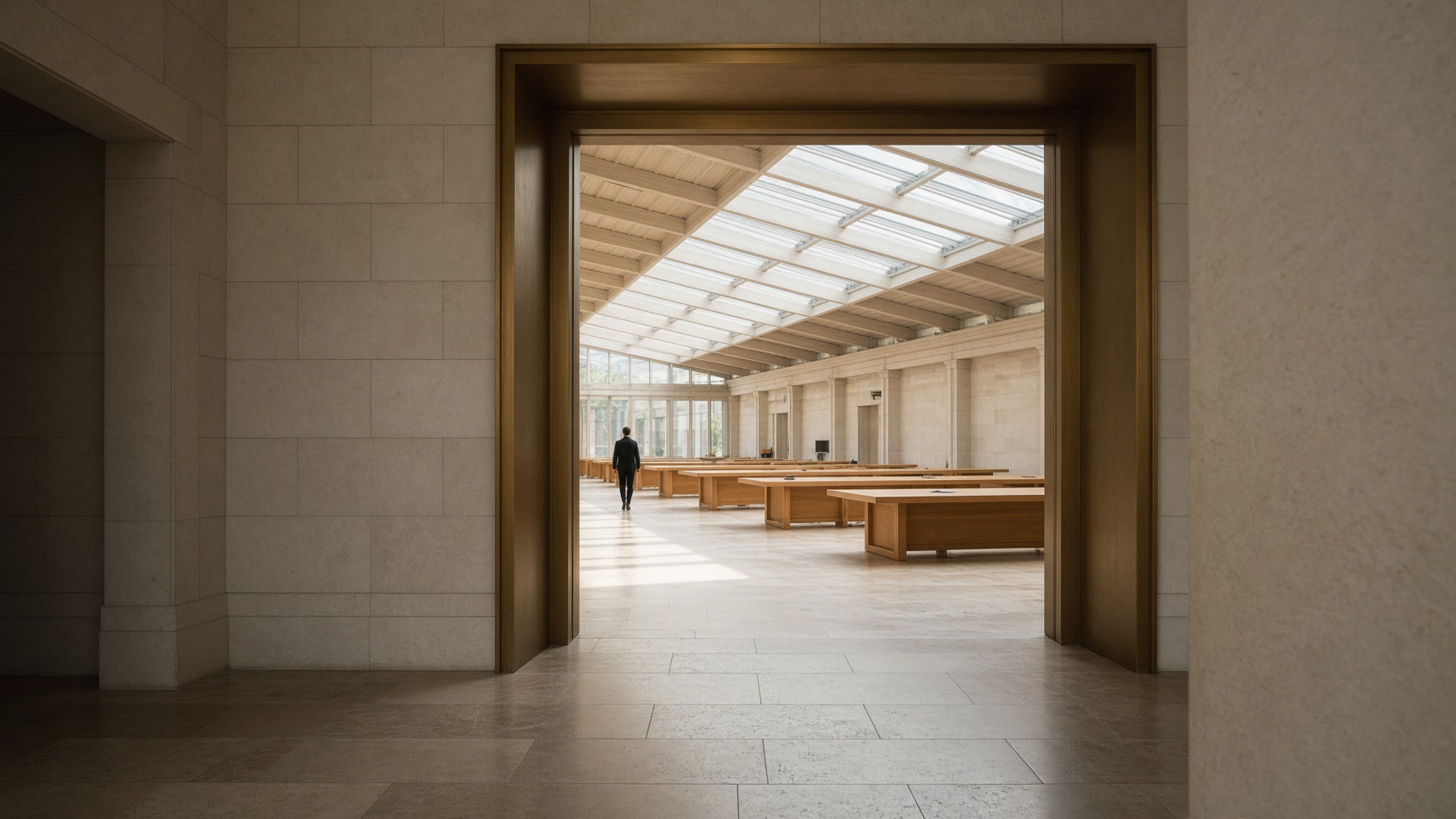
The traditional sequence is a relay. Diagnose. Recommend. Present. Handoff. Implement. The baton is a slide. The people who conceived the idea are not the people who have to live inside it. By the time the operating body receives the work, the work has become a project, and a project can be survived.
This is treated as a change-management problem. It is not. It is a design problem that was postponed until it became a people problem.
Strategy dies in the handoff because the handoff was the method. The method assumes that thinking and doing are different species, that an idea can be completed in one room and executed in another. Every institution that has lived through a ‘transformation’ knows the aftertaste: a correct-sounding direction, a tired organization, and a set of metrics that can be made to look like progress from far enough away.
The alternative is not to think less. It is to refuse the sequence. Direction is finished only when execution has a place to stand. Positioning is finished only when demand can be met without theatre. Amplification is finished only when the people who do the work would keep the instruments. Intelligence is finished only when it has changed a decision.
This is slower at the beginning, in the way that drawing a building is slower than sketching a façade. It is faster over the life of the institution, which is the only timeframe that matters.
When we are asked how implementation will be ‘supported,’ we know the drawing is not yet done. There should be nothing to hand off. There should be a system that is already running, already teaching, already being adjusted by the people who inhabit it.
A strategy that cannot be staffed was never a strategy. It was a suggestion.